
The networking and services provided by the Corporation for Education Network Initiatives in California (CENIC) support the same research and education communities that have consistently made California one of the largest economies on Earth and have provided the research and the workforce behind industries that have improved lives around the world.
Among those industries is agriculture—worth $60 billion in 2025 and providing food not only to the US but to the world. For example, almost half of all vegetables consumed in the US are grown in California. California also grows three-quarters of the fruits and nearly 100% of some very localized crops—including avocados, nuts, and wine grapes—that are consumed in the country, as well as a significant percentage of meat and dairy consumed worldwide. Decorative, ornamental crops are also a lucrative part of the state’s agriculture industry.
However, if California agriculture is to keep growing in quality and yield, it must prepare new generations of farmers who will apply the latest technology to agriculture. CENIC’s networking and services—including the CENIC AI Resource (CENIC AIR)—can be a vital part of this by turning the farm into an educational setting and making farming less physically taxing as a career. Highly local farms and their specific crops can also be linked to local educational institutions, ensuring that tech-related economic benefits accrue to rural regions and not just to a few large urban centers. At the same time, applying CENIC AIR resources can allow all types of agriculture to adapt to changing weather and climate conditions, especially as these relate to water use and availability—an extremely pressing concern as reported by many farmers across the state.

Sustainable network-enabled agriculture is a major passion of Frank Wuerthwein, director of the San Diego Supercomputer Center (SDSC) at the University of California San Diego School of Computing, Information and Data Sciences. While improving crop quality and yield is central to this goal, Wuerthwein’s vision encompasses far more than that, such as how the revolution towards experiential education can turn farms into classrooms and better attract and prepare the next generation of agricultural talent as current experts begin to retire.
Additionally, Wuerthwein is aware of the potential of AI-enabled personalized education in agricultural training and the unique value of CENIC AIR, given its statewide penetration and the rural nature of most California agriculture.
“Bringing digital assets into the classroom—or better, the classroom into the field—supports the era of learning-by-doing, which is a much more engaging way to introduce new knowledge,” said Wuerthwein. “We’ve moved on from the era of mass education that was popular in the era of mass production or an assembly-line workforce. AI allows us to personalize education in a whole new way that can be exciting for the next generation in agriculture.”
Readers of the CENIC blog will already be familiar with the Iron Horse Vineyards Testbed project, an innovative demonstration project of CENIC, its members, and its collaborative partners, which launched on the site of Iron Horse Vineyards near Sebastopol, California.
Iron Horse Vineyards CEO Joy Sterling agrees that the value of technology lies in not just attracting talent but also retaining it by improving processes and management and thus the business of agriculture itself. As Sterling put it, “We’ve made real progress if we can reduce the number of times the people in charge of the vineyard have to go out in the middle of the night to fix something.”
Thus, in addition to enabling a critical California industry, CENIC AIR can play a significant role in ensuring that the state’s rural and remote areas aren’t left behind in the AI revolution but in fact benefit from it in sustainable ways related to their local industries, enabling local talent to stay local.
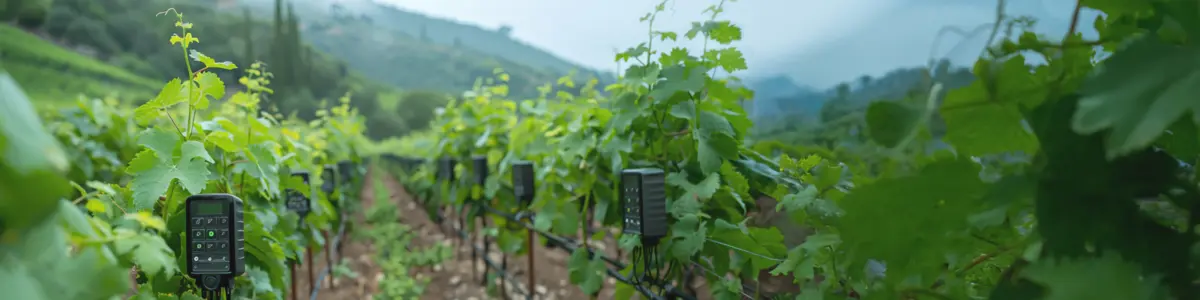
Wuerthwein also noted a major feature of agriculture in California: how localized crop varieties are statewide. “California features so many specialized crops across a wide range, including wine, almonds, flowers, avocados, citrus, and more,” he stated. “And this great variety tends to be extremely local, with different regions specializing in different crops. This creates a very unique connection to each local community in all of these places.”
That local connection extends to local education and expertise as well, with the next-generation workforce coming from families with specific experience in local agriculture, local organizations such as area chapters of Future Farmers of America (FFA), and schools and colleges with research and education programs centered on local crops. CENIC AIR, with its broad reach and specific research and education mission, is a perfect means of connecting all of these organizations and ensuring a top-quality workforce for all types of agriculture.
“When we make connections to ag tech or instrumentation in the fields and farms of California, and we bring data science to the college from the farm and vice versa, that facilitates the transformation of effective education,” said Wuerthwein. “That allows us to take the next step in transforming education from something that is performed in a classroom to something that is experienced in the field in a uniquely tailored way.”
As an example of this, Sonoma State University and Santa Rosa Junior College feature cutting-edge viticulture programs, and students and faculty from both are already participating in the nearby Iron Horse Vineyards testbed.

If California agriculture is to keep growing in quality and yield, CENIC’s networking and services must also enable our member institutions to develop the innovations that the agriculture industry will use to squeeze every drop of potential out of its soil, surroundings, and resources. Wuerthwein has found through numerous discussions with agricultural experts that efficient water use and nurturing the next-generation workforce are their top concerns.
If water use is to be managed as efficiently as possible, along with other precious resources in an age of changing weather and climate, the AI and machine learning that CENIC AIR is designed to support provides the real-time monitoring and management needed by fully instrumented farms.
Another unique advantage offered by CENIC AIR is how it connects the California research and education community throughout the state, both urban and rural, to resources such as the National Research Platform and National Data Platform. Weather and climate operate on both small and very large scales, so the ability to access nationwide collaborators—and their processing power and data—makes it possible to develop models that can be used to manage water and other resources in ways never before possible, even for individual farms.
“This means that the top challenges for keeping California’s agriculture industries growing into the next century—labor and water—can both be addressed by exactly the networking and services made possible by CENIC AIR,” Wuerthwein concluded. “And it can do so in a way that translates to better crops, better harvests, close and productive relationships among local institutions and industries, and a multigenerational pull to bring younger generations into farming.”
You can visit the CENIC Blog to learn more about the revolutionary Iron Horse Vineyards Testbed project and how it benefits the agricultural research and education programs of the CENIC membership. You can also visit SDSC’s website to learn about their cross-segmental research and education initiatives.
UC San Diego’s GAIA Initiative Promises Transformation of Atmospheric and Climate Research
CENIC Members Doing the Impossible in Weather and Climate Forecasting with AI and Advanced Networks
Reimagining Supercomputing with the Distributed Bring-Your-Own-Resources Model
The CENIC AI Resource Powers Diverse Disciplines at CENIC Member Campuses
Celebrating Dr. Ben Izadi’s Leading Role in the CENIC and Cypress College Student Internship Program
Stay up to date on news and stories from the CENIC community.